

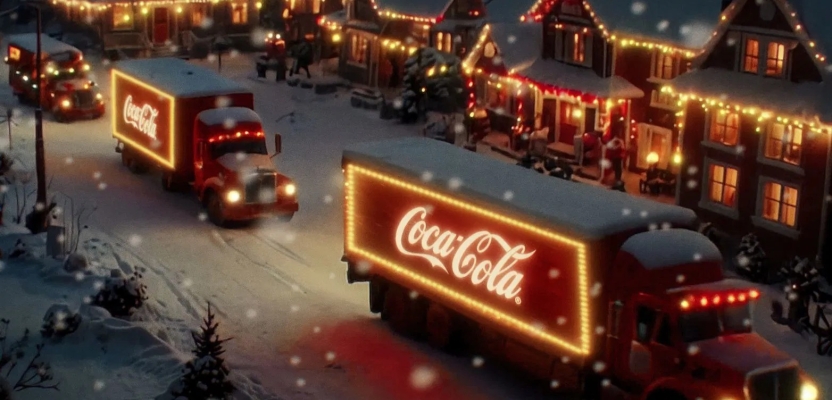

Coca-Cola's iconic "Holidays Are Coming" ad has been a herald of the festive season for decades now. However, the beverage giant's recent foray into artificial intelligence (AI) for its Christmas campaign as it used the technology to recreate (to an extent) the iconic spot has sparked a flurry of debate, raising questions whether AI is truly ready to take the reigns in serious creative work and whether "The Real Thing" still reigns supreme.
A Digital Makeover Gone Awry
In an attempt to modernise its classic 1995 "Holidays Are Coming" advertisement, Coca-Cola collaborated with AI studios to produce a 15-second commercial featuring AI-generated visuals of its signature red trucks traversing a snowy landscape. The ad aimed to blend nostalgia with innovation, but the execution left many viewers cold.
Critics were quick to point out the ad's shortcomings. The AI-generated imagery was described as "creepy," "soulless," and lacking the emotional warmth that characterized the original. Technical flaws, such as distorted visuals and unnatural movements, further detracted from the viewing experience. One viewer lamented, "The world is so over if the Christmas Coca-Cola advert is made with AI."
The Uncanny Valley of AI Creativity
The concept of the "uncanny valley"—wherein artificial representations appear almost, but not quite, human, evoking discomfort—seems pertinent here. Coca-Cola's AI-generated ad ventured into this territory, with viewers noting that the digital renderings lacked the authenticity and charm of human-crafted content.
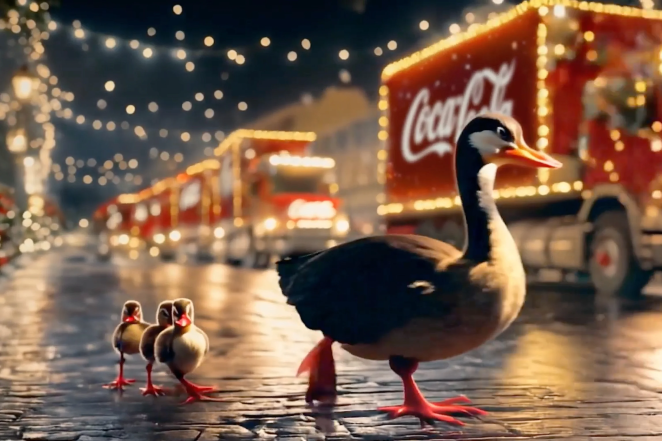
The absence of Santa Claus, a staple in previous campaigns, was particularly glaring, leading some to declare, "Coca-Cola kills off Santa with AI Christmas advert."
Consumer Versus Industry Opinions
Despite the backlash on social media and in industry circles, Coca-Cola has found support in some quarters. Andrew Tindall, SVP Partnerships at System1, offered a more optimistic take:
*"The consumer verdict is in on Coca-Cola’s AI-generated ‘Holidays Are Coming’ campaign, and the results are overwhelmingly positive. Both the 60s and 15s earned System1’s maximum 5.9 Star Rating with outstanding brand recognition.
"While industry opinions may vary, it’s clear Coca-Cola has kept enough familiar elements from the original—like the soundtrack, iconic assets and narrative—to ensure another strong performance this season. Consistency continues to compound creativity, AI-generated or not!”*
Tindall’s remarks underline a crucial divide: while the industry and social media critics may harp on technical flaws and a perceived lack of humanity, the consumer audience appears more forgiving, valuing familiarity and brand recognition above all.
A Backlash Brews
The backlash was swift and widespread. Social media platforms buzzed with negative reactions, with users expressing disappointment over the company's reliance on AI for such a beloved tradition. Comments ranged from critiques of the ad's aesthetics to broader concerns about the implications of AI in creative industries. One user quipped, "Just saw an AI generated Coca Cola commercial on TV... genuinely how are we letting this happen?"
Industry professionals also weighed in. David Jones, founder and CEO of The Brandtech Group, remarked, "AI in particular plays into a human fear. In the same way that all humans are scared of sharks, they’re scared of AI and machines taking over the world."
Coca-Cola's Defence
In response to the criticism, Coca-Cola emphasized that the ad was a collaborative effort between human creatives and AI technology. The company highlighted the efficiency gains, noting that the AI-assisted process saved time and resources. Javier Meza, Coca-Cola's EU chief marketing officer, stated, "We didn’t start by saying: ‘OK, we need to do this with AI.’ The brief was, we want to bring Holidays Are Coming into the present and then we explored AI as a solution to that."
However, this rationale did little to assuage critics who felt that the ad lacked the human touch that made previous campaigns memorable. The sentiment was perhaps best captured by a social media user's remark: "Soulless and devoid of any actual creativity. This looks horrible man. As big as Coke are they can afford to hire actual artists."
The Broader Implications
Coca-Cola's AI-generated ad serves as a cautionary tale for brands eager to jump on the AI bandwagon. While AI offers remarkable capabilities, its application in creative fields must be approached thoughtfully. The backlash underscores a key lesson: technological innovation should enhance, not replace, the human elements that resonate with audiences.

As AI continues to evolve, it holds the potential to revolutionize various industries. However, when it comes to crafting messages that touch the heart and evoke nostalgia, the human touch remains irreplaceable. In the case of Coca-Cola's Christmas campaign, it appears that "The Real Thing" is still king.
Holidays Are Still Coming
Coca-Cola's attempt to infuse AI into its holiday advertising has highlighted the challenges of balancing innovation with tradition. The mixed reactions to the AI-generated ad suggest that, at least for now, audiences prefer the authenticity and warmth that come from human creativity. As brands navigate the integration of AI into their marketing strategies, they would do well to remember that some classics are best left untouched.