


When a creative project lands on a brand’s desk, the first brief is rarely the creative brief. The first brief is the operating question: is this an agency or freelancer job, or does it belong with an in-house team that already understands the brand’s tone, politics, and pace?
In 2026, the most expensive mistakes tend not to be “bad ideas” but bad delivery choices. The wrong model turns good work into slow work, slow work into watered-down work, and watered-down work into “why didn’t this land?” post-mortems.
That’s why the agency vs inhouse debate keeps resurfacing: it’s not philosophical. It’s operational. It’s about choosing the system that will actually ship the work (at the right standard) without burning everyone out or burying the budget in revision cycles.
This guide is built for brands, in-house marketing teams, marketing leads, and procurement managers who want a clear way to choose between an agency, a freelancer, or an in-house creative based on budget, speed, complexity, brand continuity, and creative ambition. It maps the pros and pitfalls of each model, uses real-world scenarios, and includes a decision framework designed to replace guesswork with something more useful: clarity.
The uncomfortable truth: these aren’t suppliers, they’re systems

GREY ANTS
Most organisations talk about agencies, freelancers, and in-house teams like they are interchangeable suppliers. They aren’t. Each option is a different system, with different incentives, workflows, and failure modes.
- In-house is a continuity system: it wins on brand knowledge, speed-to-output, and day-to-day control.
- Freelancers are a flexibility system: they win on specialist craft, agility, and surge capacity.
- Agencies are an orchestration system: they win on multi-disciplinary delivery, strategic perspective, and scale.
That matters because creative work is not just “making”. It’s briefing, decision-making, approvals, governance, legal, brand safety, stakeholder alignment, production, QA, and rollout. When a brand chooses “the cheapest” or “the fastest” without matching the work to the system, the project doesn’t simply get harder but becomes structurally designed to wobble.
A good delivery model does something quietly brilliant: it makes the right work feel easy. The wrong model makes everything feel like friction.
What’s changed in 2026 (and why this decision has become a minefield)

Bottomline
A decade ago, a brand could default to an agency for “big stuff”, hire a freelancer for “small stuff”, and keep an in-house designer to “keep things consistent”. That still happens but the ecosystem has changed enough that the default choices no longer hold.
1) Marketing teams are under pressure to do more with less without looking like they are doing less
Budgets are scrutinised. CFOs want cleaner justification. Procurement wants predictable commercial models. Leadership wants creative that looks “premium” without paying “premium”. The result is a paradox: brands want more output, more personalisation, more channels, more speed and then act surprised when the system creaks.
2) Speed has increased, but governance has become the tax
Tools that accelerate production (including AI workflows, templating systems, modular design libraries) have made output faster but they have also increased risk: rights, brand safety, legal, compliance, reputational damage, and inconsistent quality. The faster brands move, the more they need a system that prevents avoidable mistakes.
3) The market has normalised hybrid delivery
In 2026, many of the strongest brands run a hybrid model: in-house for continuity, freelancers for specialist bursts, agencies for major moments. This is not adaption, not indecision. The question isn’t “which option is best?” It’s “what combination fits the business, and who owns it?”
And this is where brands get stuck: hybrid delivery only works when there is governance. Without governance, hybrid becomes chaos with three invoices.
The three models, clearly defined
Happy Finish
Before diving into the framework, it helps to define what each model actually does at its best and where it tends to go wrong.
In-house creative (properly built)
An in-house team is a brand’s internal creative engine. It is built around continuity, speed, and a deep understanding of brand nuance, including all the unspoken rules that never make it into a PDF guideline.
Best at: always-on content, brand consistency, fast turnarounds, iterative performance creative, internal comms, ongoing product needs.
Weakest at: major strategic shifts, cross-market creative transformation, large-scale integrated campaigns requiring a broad bench of disciplines.
Freelancers (used with intent)
Freelancers are specialist contributors or small flexible teams. They are not “agencies without the office”, they are individuals with deep craft in a discipline, often operating faster than larger structures.
Best at: specialist craft (motion, illustration, type, UX writing, film editing), short projects, fast execution of defined deliverables, flexible scaling.
Weakest at: unclear briefs, multi-stakeholder politics, projects that require project management and orchestration (unless the brand supplies that role).
Agencies (chosen for the right reasons)
Agencies bring multi-disciplinary teams, process, strategic viewpoint, and production infrastructure. At their best, they don’t just make work. They help brands decide what work they should make and why.
Best at: brand strategy + identity, integrated campaigns, complex production, transformation work, multi-market rollouts, solving ambiguous problems.
Weakest at: small jobs trapped inside big process, projects with slow client decision-making, briefs that are actually resourcing problems disguised as “strategy”.
What brands get wrong when choosing delivery

Marcel Weninger
Some patterns show up again and again:
Mistake 1: choosing based on budget before defining scope
Brands often pick a model because it looks “cheaper”, then discover the real cost is hidden in rework and delay. Creative is rarely expensive because of talent — it becomes expensive because of indecision and unclear goals.
Mistake 2: hiring an agency when what’s needed is internal ownership
An agency cannot compensate for a brand that won’t decide. If no one internally can own the brief, align stakeholders, and make calls, the agency becomes a paid meeting.
Mistake 3: hiring freelancers to solve organisational politics
Freelancers cannot fix a broken approval culture. They can only suffer it.
Mistake 4: building in-house without leadership
An in-house team without creative leadership becomes a production queue. It will deliver output, but not momentum. And talented people won’t stay if the work never stretches.
A practical decision framework brands can actually use

The District
The goal here is not to overcomplicate it. It’s to create a repeatable method that works across project types.
Step 1: classify the project type
Most creative briefs fall into one of these categories:
- Always-on production: social content, CRM, performance creative, internal comms, regular updates
- Specialist craft: motion, illustration, 3D, type, editorial design, UX writing
- Strategic transformation: repositioning, rebrand, new messaging architecture, new product narrative
- Integrated campaign: idea + assets across channels, production, rollout, measurement
- High-risk / high-visibility: CEO-level scrutiny, regulated sectors, reputational exposure
- Experimental innovation: new formats, new platforms, uncertain outcomes
The mistake brands make is treating all of these as “creative work” and therefore “the same delivery problem”. They are not.
Step 2: identify the dominant constraint
Every project has a dominant constraint. Not the one in the brief. The real one.
- Speed (needs shipping now)
- Quality / craft (needs to look premium)
- Complexity (needs orchestration)
- Continuity (needs to feel like the brand)
- Risk (needs governance)
- Budget (needs to be controlled tightly)
The dominant constraint should decide the model.
Step 3: pressure-test with six questions
- Is demand stable or spiky?
Stable → in-house wins
Spiky → freelancers/agencies win - Is the output clear or ambiguous?
Clear deliverables → freelancers/in-house
Ambiguous problem → agency - Is delivery single-discipline or multi-disciplinary?
Single-discipline → freelancer
Multi-disciplinary orchestration → agency - How important is brand continuity?
Very high → in-house / embedded
Moderate → freelancer or agency fine - How fast does the organisation decide?
Fast → any model can win
Slow → agencies become expensive, freelancers get stuck, in-house absorbs the pain - What is the actual risk?
High risk → agency + governance + internal owner
Low risk → in-house + freelancers for testing and learning
This set of questions does something useful: it forces the brand to diagnose itself, not just the project.
What projects require an agency?

Lemonade Illustration Agency
Projects require an agency when the job isn’t merely to produce assets but to solve complexity.
An agency is usually the right choice when:
1) The problem is ambiguous and needs strategic clarity
Rebrands. Repositioning. Campaign platforms. Launch narratives. Messaging architecture. If the brand cannot summarise the objective in one sentence, it probably needs strategy before it needs design.
2) Delivery requires orchestration across multiple disciplines
A campaign isn’t a poster. It’s a system: concept, messaging, assets, channel logic, production, rollout. Agencies are built to hold that complexity and coordinate it.
3) The stakes are high and external perspective matters
Sometimes a brand needs someone outside the internal politics to say the thing nobody internally can say. Agencies can be useful not only for craft but for truth-telling.
4) Production infrastructure is required
Complex film, experiential work, high-volume production with high quality thresholds — agencies often have producer networks and workflows that brands don’t want to build from scratch.
Scenario: the “rebrand with consequences”
A scale-up has grown quickly and now looks like five brands arguing through one website. Sales says one thing. Product says another. Marketing is stuck translating the conflict into assets. This is not a “design refresh”. This is a business alignment problem with a creative output. An agency is the correct system but only if the brand assigns a decisive internal lead to partner with them.
Is hiring a freelancer cheaper than an agency?
Maria Ginga
Sometimes. Often. But “cheaper” is the wrong starting question.
A freelancer can be cheaper per day, but agencies include roles and protections that brands often forget to price:
- project management
- creative direction
- account management
- quality control
- producer networks
- continuity planning
- resilience (more than one person, less single-point-of-failure risk)
So the better question is: Is the brand paying for execution or paying for orchestration?
When freelancers are cheaper (and smarter)
Freelancers are the right economic choice when:
- the deliverables are clear
- the scope is bounded
- the work is specialist craft
- the brand has strong internal direction and fast decision-making
When freelancers become “cheap now, expensive later”
Freelancers become expensive when they are asked to:
- manage multiple stakeholders
- solve strategic ambiguity
- push back on scope creep
- run project governance
- coordinate multiple disciplines
That doesn’t mean freelancers aren’t capable. It means the brand is asking a person to become a system.
Scenario: “one freelancer becomes the whole brand memory”
A brand relies on a single freelancer for all its design output. That freelancer ends up holding the brand system in their head. When they go on holiday, everything stalls. When they raise rates, the brand panics. That’s not a freelancer problem, that’s a governance problem. The fix is either proper in-house ownership or a bench.
Should I hire an agency or a freelancer?

i2i Art Inc.
This is the question most teams ask, and the answer is surprisingly simple:
Hire a freelancer when you know what you need. Hire an agency when you don’t.
More precisely:
Hire a freelancer when:
- The output is defined (e.g., 10 motion assets, a set of illustrations, a landing page design)
- The work is single-discipline or specialist craft
- The brand can supply direction, feedback, and fast approvals
- Speed matters more than deep strategic exploration
- The risk level is manageable
Hire an agency when:
- The problem is unclear or strategic (positioning, narrative, platform)
- The work requires cross-discipline coordination
- The brand needs an external viewpoint to challenge assumptions
- The campaign is integrated and high-stakes
- The brand needs production infrastructure and process
Scenario A: “specialist surgery”
A fintech needs a set of distinctive illustrations and motion explainers for a product launch. The brand has a clear story, references, and sign-off structure. A specialist illustrator and motion freelancer will beat an agency for speed and craft because the system fits the job.
Scenario B: “integrated platform”
A retail brand needs a seasonal campaign platform that works across paid social, out-of-home, email, packaging, and in-store. The internal team is strong but busy. The brief needs concept development, roll-out logic, production management, and consistent craft across channels. That is agency work — not because the internal team can’t do it, but because the system required is orchestration.
The hidden variable: internal decision-making speed
This is the part brands hate admitting: the best partner model is meaningless if the organisation is slow.
- If sign-off takes weeks, an agency gets expensive.
- If sign-off takes weeks, freelancers get stuck.
- If sign-off takes weeks, in-house becomes a queue.
The solution isn’t “pick a different supplier”. The solution is “fix decision rights”.
The reality: most brands need a hybrid model but they need to run it properly
The healthiest model for many brands in 2026 looks like this:
- In-house core for continuity and BAU
- Freelance bench for specialist craft and surge capacity
- Agency partners for major strategic moments and integrated campaigns
But “hybrid” only works with three operational disciplines:
- A single internal owner per project: No committees. No rotating responsibility. Someone owns outcomes.
- A briefing system that clarifies what success looks like: A brief should answer:-
- What are we making?
- For whom?
- Why?
- What does success look like?
- What are the constraints?
- A feedback and approval system with time limits: Unlimited rounds kill quality and timelines. Brands need structured checkpoints, decision windows, and criteria-based feedback.
Hybrid isn’t complicated. It’s just disciplined.
Procurement: how to buy creative without strangling it

Anna Jehan
Procurement’s job is not to make creative cheaper. It’s to make creative legible.
The best procurement teams do five things:
- Buy outcomes where possible, not hours: Hourly models reward time. Outcome models reward clarity.
- Standardise contracts for speed: Freelancer onboarding can become friction-heavy without templates, NDAs, IP clauses, and access processes.
- Define rights and usage clearly: Rights confusion becomes expensive later. This isn’t glamorous, but it matters.
- Measure what the work is for: Brand work shouldn’t be measured like performance work. Campaign platforms shouldn’t be judged like banner ads. Match metrics to intent.
- Protect craft by protecting process: Procurement can help creative succeed by enforcing clarity: single owner, defined scope, realistic timelines, and fewer “surprise stakeholders”.
Where Creativepool comes in
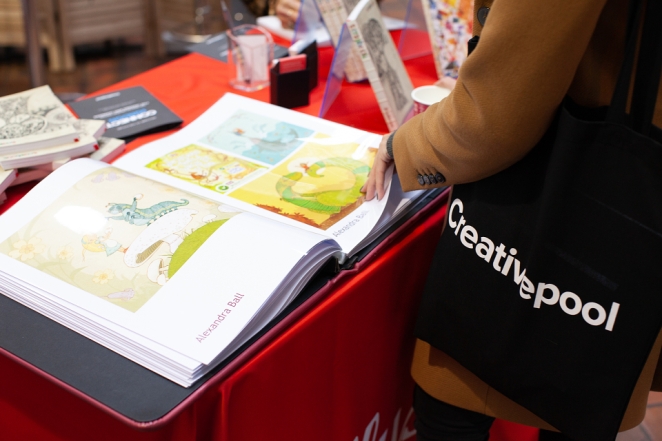
Creativepool’s role in this ecosystem is straightforward: it reduces the time brands waste finding credible talent and partners.
- Brands looking for agencies need to find creative service companies with relevant specialism, not generic directories.
- Brands looking for freelancers need to see real portfolios, not just claims.
- Brands hiring in-house need access to talent who are already embedded in the industry.
That’s the connection point: the right model still matters, but the right model is useless if the brand can’t reach the right people quickly.
The best brands pick systems, not sides
The smartest brands in 2026 don’t treat “agency”, “freelancer”, or “in-house” as identity choices. They treat them as different systems for different work.
If the work is continuous and brand-sensitive, in-house is often the strongest engine. If the work is specialist craft with defined outputs, freelancers deliver speed and precision, as long as the brand can decide quickly. If the work is complex, strategic, and integrated, agencies earn their fee by holding ambiguity, orchestrating delivery, and pushing the work beyond internal comfort zones.
And when the next project arrives (the one that triggers the familiar debate) the most useful question is still the unglamorous one: is this an agency or freelancer job, or is it better solved by building a stronger in-house system? That’s the real heart of agency vs inhouse: not who is “better”, but which delivery model matches the moment and whether the brand has the governance to make any of them work. In creative delivery, the right choice doesn’t just improve the work. It improves the entire working week.
ARTETRA February 23rd, around noon
This article provides a very grounded look at the creative landscape. In our experience, particularly when working with international brands, the decision often moves beyond capacity into perspective. An agency’s value lies in its ability to bring a diverse global experience and a specific depth of strategic thinking that can be hard to maintain in-house or even for a freelancer. It’s about finding that external clarity to solve truly complex business problems.Thanks for the in-depth piece, Benjamin.