
Most conference booths aim for volume, collecting as many business cards or sign-ups as possible. They focus on screens, demos, and swag. These are great for brand awareness, but you’re essentially touching everyone and hoping for a 2% follow-up rate.
But what if you aren't there for volume? What if you’re at a conference to raise capital?
A different goal requires a different strategy.
The Situation
Moniepoint is a powerhouse in Nigeria with over 127,000 agents and millions of daily transactions. However, at an international tech conference in Dubai, they’re competing with global fintechs that often have bigger budgets and more name recognition. A standard booth filled with just screens and signup forms means they blend in.
The question: How do you design a booth that captures serious investor attention without losing your essence?
Investors want a specific kind of data. They need to understand the business health, user growth, and scale. But numbers alone don’t answer the real question: Why does this business need to exist?
For Moniepoint, the "why" isn’t just transaction volume; it’s the woman in Ikeja running three POS terminals who now employs her cousin. In this narrative, numbers show scale, but stories show impact. You need both.
The Concept: Three Zones
The goal shifts from "touching 500 people" to "having 100 meaningful conversations."
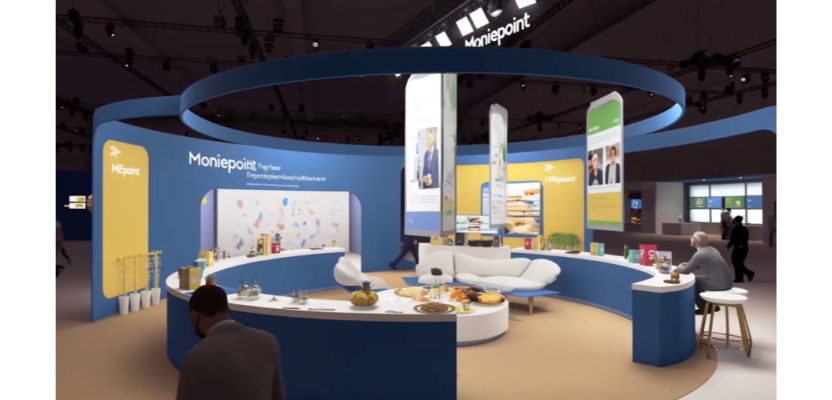
Zone 1: The Story Walk
A physical installation of suspended panels showcasing Moniepoint’s agent network. Data is woven into human stories.
- The Hook: "127,000 agents across 36 states."
- The Humanity: "This woman runs 3 terminals. She makes ₦150,000/month and employs her cousin."
The installation is self-guided. No staff pitching. In 2–3 minutes, a visitor understands that this isn't just a payments app, it’s infrastructure.
Zone 2: The Conversation Space
A lounge area featuring a "Powered by Moniepoint" snack bar. This includes brands like Nuli Juice or local coffee that actually use the platform.
- The Proof: Small cards next to the snacks read: "Nuli Juice – 50,000 monthly transactions through Moniepoint."
Attendees aren’t just eating; they are consuming proof of the ecosystem. A brand rep joins the attendee not to pitch, but to have a real 15–30 minute conversation. This is where you filter: Are they curious, skeptical, or ready to talk real numbers?
Zone 3: The Commitment
If there is clear interest, we skip the vague "let’s stay in touch" and move to concrete steps:
- The Gift Box: Nigerian products from the brands they just tasted, plus Moniepoint’s official impact report.
- The Dinner Invite: A private event on the evening of Day 2 for the 15–20 most serious investors.
The Dinner
A private venue where every dish on the menu ties back to a business in the Moniepoint ecosystem. The format is simple:
- Context setting & formal presentation (business model, growth, opportunity).
- A virtual tour of Nigerian operations.
- Open Q&A and one-on-one time with leadership.
By the end, you aren’t just "considering" Moniepoint. You’re either in or out. That clarity is a win for everyone.
Why This Works
- Qualification: The installation filters interest, the lounge confirms seriousness, and the dinner seals the commitment. You spend resources only on high-value leads.
- Tangibility: Fintech can feel abstract. By showing the agents and tasting the products they power, the service becomes concrete.
- Context: Moniepoint owns its Nigerian roots. Using local food and stories proves their deep market knowledge.
- Generosity: No hard sell. Attendees learn, sit, and ask questions. Investors come to dinner because the experience was valuable, not pushy.
The Bottom Line
Success isn’t 500 booth visits; it’s 20 investors at dinner who understand the business well enough to write a check. That is a design problem—and design problems have design solutions.
ASE designs brand experiences for tech companies and B2B brands across Africa. Based in Accra + Lagos.