Alejandro Esteves Ponte
Executive Creative Director | Brand Transformation
ABOUT
CHALLENGE:
Virtual reality was an emerging technology with enormous commercial potential but no clear creative or communicational framework in the Latin American market. Brands, agencies and event producers understood VR as a gadget, not a strategy. The challenge was to build a company — V1Media — that could position VR/AR not just as a tech service, but as the next evolutionary chapter of human experience design: a new category called VRXP (Virtual Reality Experience).
The conceptual challenge ran deeper still: how do you give a technology company a soul? VR headsets are clinical objects. The task was to reframe them through the oldest symbolic language known to humanity — the mask — making the product feel mythic, inevitable, and emotionally resonant before the first pitch deck was even opened.
Commercially, V1Media needed a scalable product architecture that could serve verticals as different as education, real estate, e-commerce, live events, medical recovery, and gaming — all under a single brand and revenue model covering content creation, hardware rental, software development and B2B consulting.
IDEA:
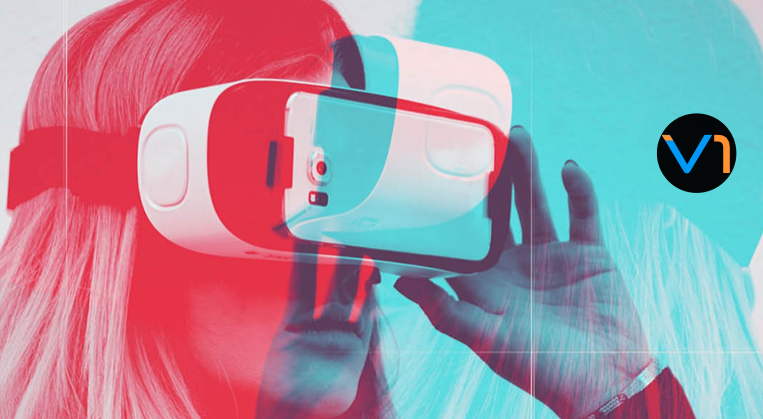
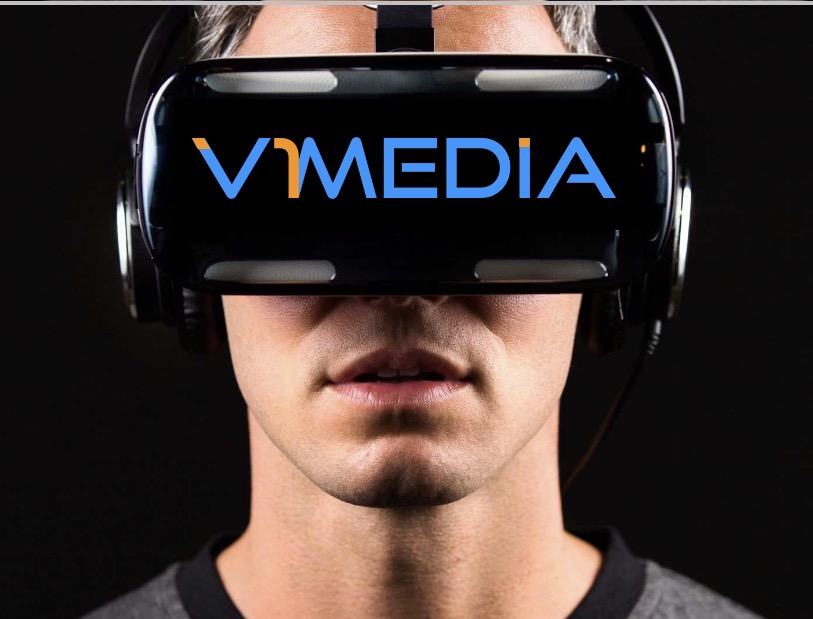
The entire concept was anchored to a single, powerful insight: the VR headset is the ultimate human mask. From ancient ritual to battlefield protection to surgical PPE to the fighter pilot's visor — humans have always worn masks to access dimensions beyond their physical reach. The Meta Oculus headset is simply the latest, most powerful version of that same impulse. This reframe turned a piece of consumer electronics into an artifact with 10,000 years of cultural history behind it.
From that conceptual backbone, the company was named The VRXP Company and structured around four service pillars — VRXP Creative Content, VRXP Events, Rent / Sale & Consultant, and Software Development — each with a fully registered product portfolio of nine proprietary experiences covering every major commercial use case for immersive technology.
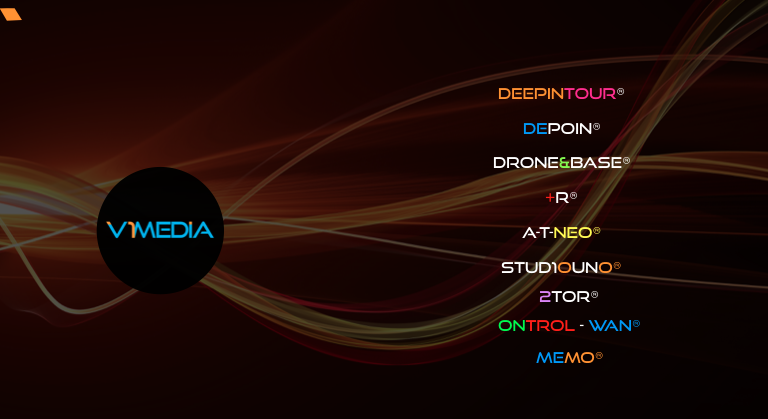
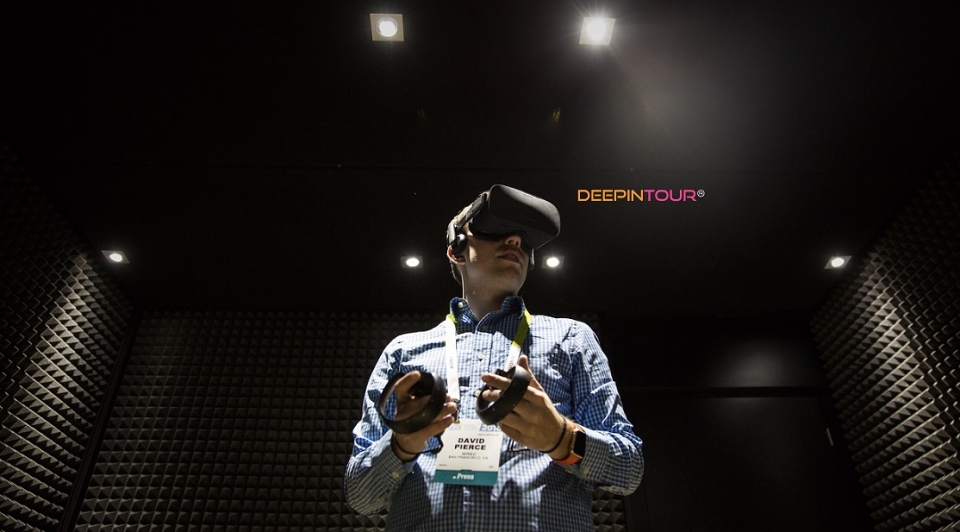
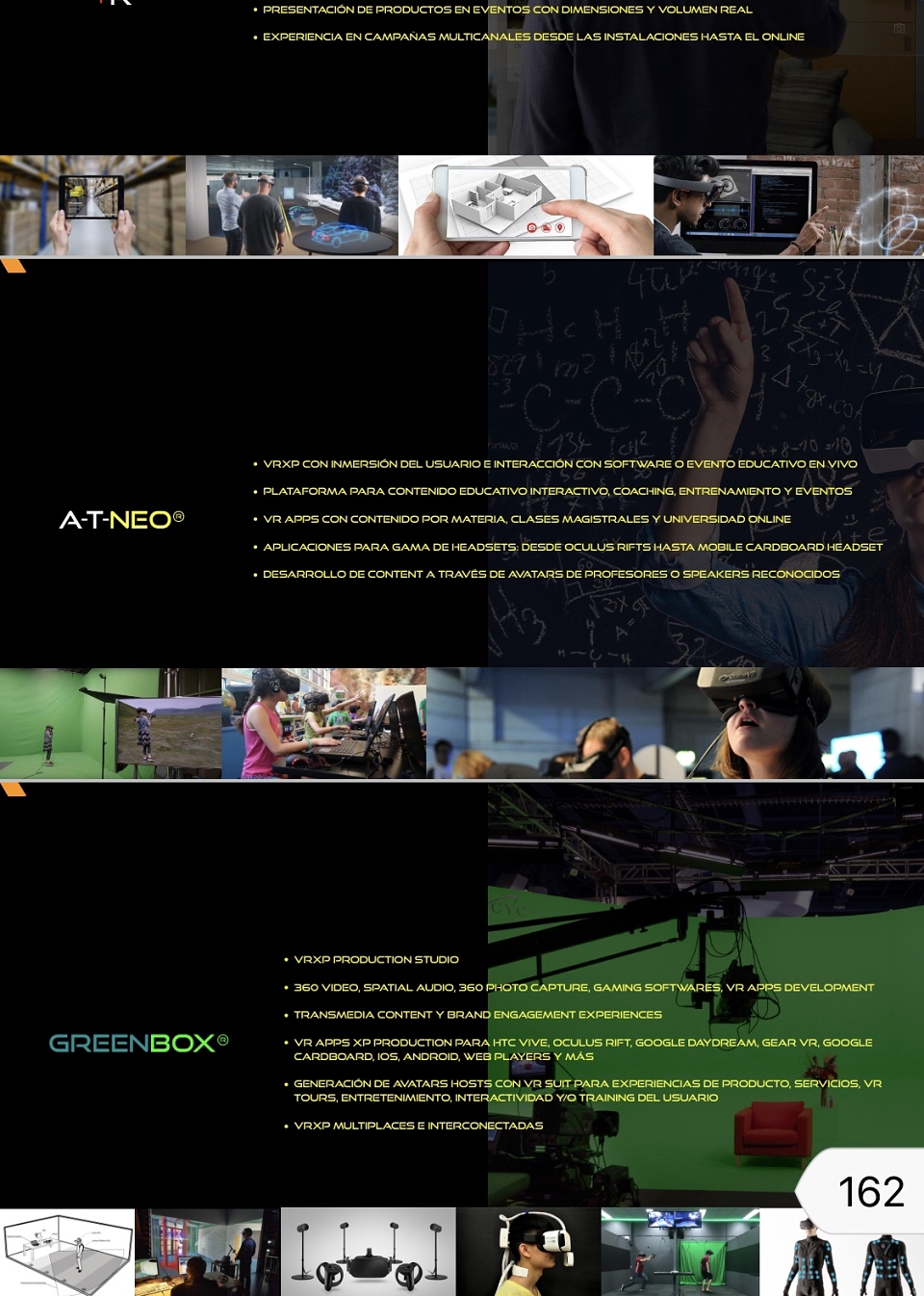
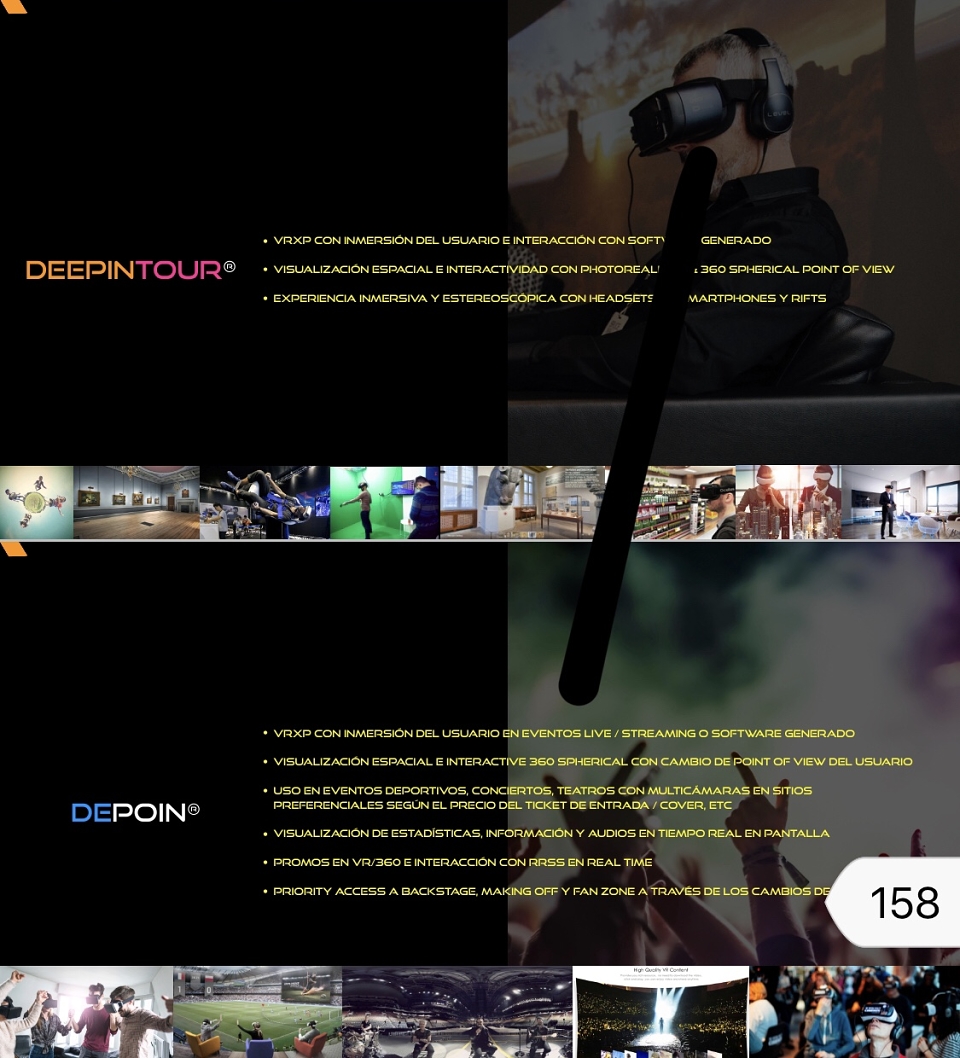
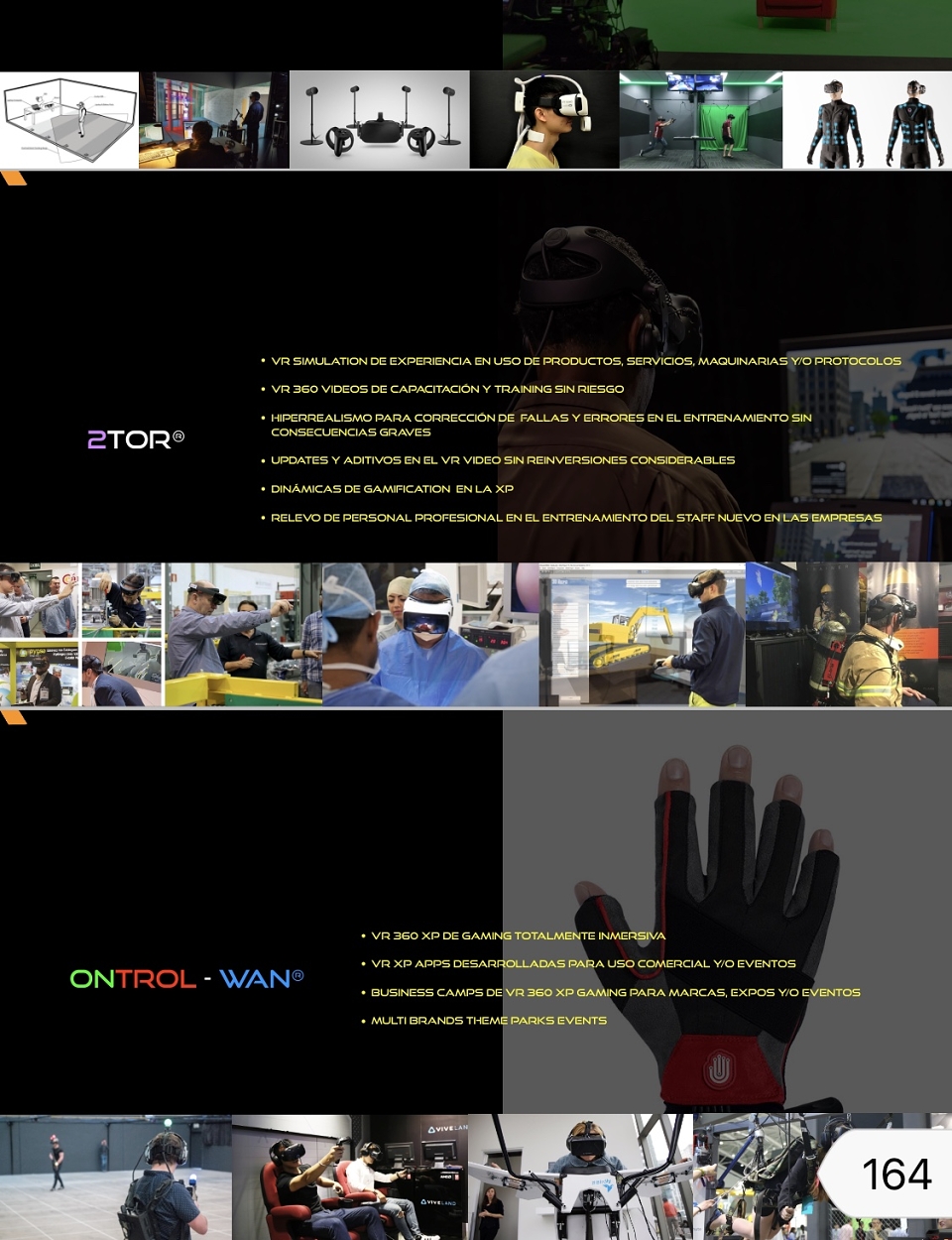
The product architecture was designed for maximum market coverage: DeepInTour® (spatial VR for real estate and retail), Depoin® (live events and concerts in 360), Drone&Base® (drone-powered VR content), +R® (augmented reality for products and campaigns), A-T-Neo® (interactive VR education platform), GreenBox® (full VR production studio), 2TOR® (risk-free VR training for corporations), Ontrol-WAN® (immersive VR gaming), and Memo® (360 capture of life's milestone events).
-DeepInTour®
Photorealistic spatial tours — real estate, retail, architecture.
-Depoin®
Live events in 360 — concerts, sports, theatre with view-switching
-Drone&Base®
VR drone-flight immersion for real estate, news, architecture.
-+R®
Augmented reality — product catalogues, multichannel campaigns.
-A-T-Neo®
Interactive VR education — coaching, masterclasses, avatar teachers.
-GreenBox®
Full VR production studio — transmedia content, 360 video, apps.
-2TOR®
Corporate VR training — risk-free simulation, gamified onboarding.
-Ontrol-WAN®
Immersive VR gaming — brand events, theme park experiences.
-Memo®
360 VR capture of life milestones — weddings, graduations, births.
CREATIVE DIRECTION:
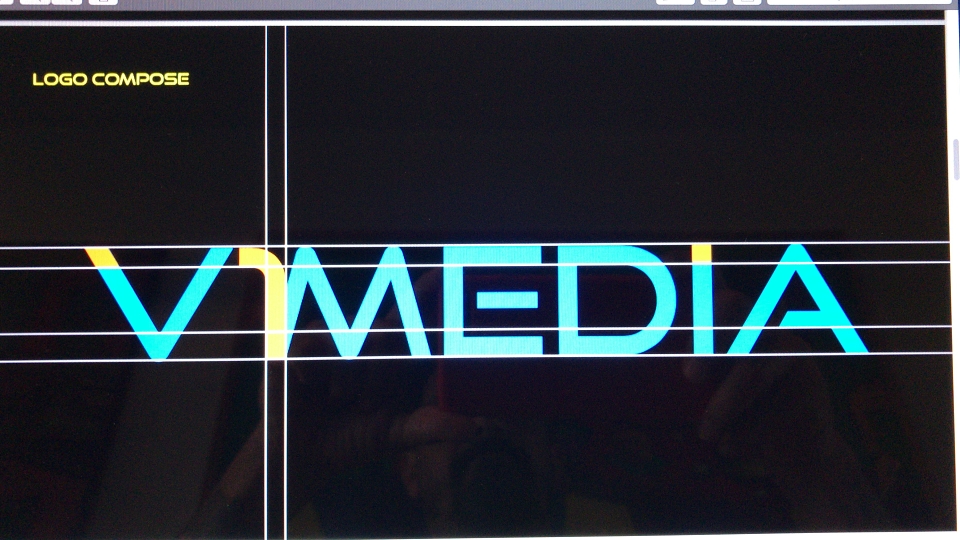
Full authorship of the company's identity, visual language and communication strategy. The brand system was built around a high-contrast palette of electric blue, amber-orange and black — deliberately technological in feel but warm enough to humanize an immersive-tech offer. The V1Media logotype fused digital precision with forward motion; the VRXP naming convention gave the product portfolio a unified, ownable language across all verticals.
The presentation deck structure was itself a creative act: opening with the anthropological history of the mask — ritual, protection, war, spirituality — before arriving at the VR headset as the logical culmination. This narrative arc transformed a commercial pitch into a cultural argument. The prospect didn't just learn what V1Media did; they understood why VR was inevitable and why V1Media was the right guide into that territory.
Each of the nine registered product experiences received its own visual identity, naming logic and positioning within the portfolio — ensuring that the company could cross-sell and upsell across verticals without creating brand confusion. The pitch architecture was designed to be modular: it could be deployed as a full brand story for investors, as a vertical-specific proposal for a real estate developer, or as a capabilities overview for an event promoter, all from the same visual and narrative system.
Market data (Samsung, VRTalk) was integrated not as a footnote but as a structural element of the visual storytelling — reinforcing the sense that V1Media was not proposing a trend but positioning for a structural shift in how humans interact with information, space and experience.
MADEIT CREDITS
-

V1MEDIA Panama CityClient
-

Alejandro Esteves PonteChief Creative Officer and Brandbuilder