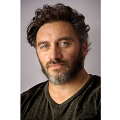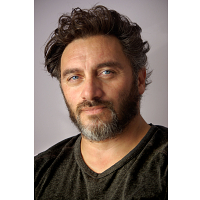
Aaron Videla
Video Editor / Sound Designer
ABOUT
Sound Designer & Re-Recording Mixer | "In Rittardo"
Alright, let's talk about the sound on In Rittardo. My role wasn't just about fixing audio; it was about building a complete, living auditory world that became the film's emotional backbone. I was the architect of its entire sonic identity, from the dirt under the characters' feet to the final mix you hear in the theater. I was hands-on with every single layer, ensuring they all locked together perfectly.
Here’s a breakdown of the key roles I owned and the creative philosophy behind them:
???? Foley Artistry & Sound Design
This was about grounding the absurd in reality and amplifying the internal chaos.
The Art of the Mundane: I performed and recorded every foley element myself. The protagonist's specific, frantic walk (a mix of leather-soled shoes on pavement and a slight, anxious foot drag), the clatter of a chaotic desk, the weight of a suitcase filled with doubt—each sound was tailored. The goal was hyper-realism, making the character's physical world so tangible you could feel it, which made his internal turmoil even more relatable.
Designing the Internal Monologue: For the sequences depicting overwhelm and "time distortion," I moved beyond realism. I created a sonic palette of anxiety using manipulated clock ticks (slowed down, reversed, pitched into metallic drones), the sub-bass rumble of a racing heart, and the warped, distant echoes of deadlines being shouted. These weren't just sound effects; they were the auditory point-of-view of someone spiraling.
????️ ADR (Automated Dialogue Replacement) Supervision
When the original production audio was unusable due to location noise, I didn't just recapture words; I recaptured performance.
I directed the lead actor in the studio, not just for lip-sync, but to re-access the specific emotional state of each scene—the breathless panic, the defeated whisper. My focus was on seamless integration, processing the new dialogue with precise EQ, convolution reverb (to match the original location), and subtle saturation so it married perfectly with the production track, leaving no audible "seam."
✂️ Sound Editing & Construction
This was the phase of surgical precision and creative assembly. I built the soundtrack from the ground up.
Dialogue Editing: I cleaned every line—removing clicks, breaths (when they broke pacing), and background noise—with a light touch to preserve the natural performance. I created smooth, invisible edits between takes so the dialogue flowed effortlessly.
Ambience & World-Building: I crafted continuous, evolving background beds for each location. A quiet office wasn't just silent; it had the specific, low hum of fluorescent lights, the faint, rhythmic tapping from a distant keyboard, and the occasional sigh from a coworker. This "world tone" provided a consistent acoustic space for everything else to sit in.
SFX Editing & Layering: Every sound effect was carefully chosen, edited, and often built from multiple layers. A door slam wasn't one sound; it was the wooden impact, the rattle of the frame, the jingle of keys on the other side, and the subsequent silence that felt heavier because of it.
???? Re-Recording Mixing (The Final Alchemy)
This is where all the isolated elements fused into one powerful, cinematic experience. I balanced and shaped every track to serve the story.
The Emotional Mix: I used volume, panning, and EQ not just for clarity, but for emotional guidance. In a tense scene, I might subtly duck the ambient music to make the character's breathing more prominent, pulling the audience into his anxiety. The surreal time-warp sounds were mixed to feel like they were emerging from within the scene, not just placed on top of it.
Dynamic Range & Impact: I managed the full spectrum of sound, from the most delicate, almost inaudible sigh to the sudden, overwhelming cacophony of a panic attack. This dynamic contrast was crucial for the film's comedic and dramatic rhythm.
Final Polish & Delivery: I ensured the final mix translated perfectly across all systems—from a high-end theater surround setup to a laptop speaker—and delivered all required technical stems (Dialogue, Music, Effects, and Full Mix) to the highest broadcast and cinematic standards.
My work on In Rittardo was a holistic process. It wasn't a series of separate tasks, but a single, continuous creative mission: to use every tool of sound to translate the script's themes of chaos, time, and anxiety into a visceral, auditory experience that connected directly with the audience's nervous system. The result was a soundtrack that doesn't just accompany the picture—it breathes with it, argues with it, and ultimately, defines its unique feel.