


You read that right, at 3rdspace we are all about creating less impact. Did you know that a single ad campaign can generate 70 tons of CO₂, that is the equivalent of what seven people produce in an entire year (MOEVE Global, 2025).
When we say Make Good Stuff Happen for Business, People and Planet, it’s something we live by every day, especially in production. We use a globally recognised Green Score Calculator which gives us a line by line breakdown of all energy that will be used to produce a campaign. That means we know our impact on the planet, before we even shout ‘Action!’.
Our most recent TVC, shot across 2 days around Gundagai and Jugiong in rural NSW, is just one example of how we walk the walk with our clients. Our carbon footprint was under 25% of the global average for a production of a similar size.
We back this up with data: on another recent project, we recorded a total footprint of just 0.15 tCO2e, saving over 8.2 tonnes of carbon compared to the AdGreen average. Sometimes less really is more.
By the end of 2026, a massive 80% of advertising will be digital video, according to Forrester. The future of content creation has to be sustainable, and 3rdspace, with our in-house creatives, directors, producers, and editors, is ready to create compelling content and TVC’s in an agile, less impactful manner.
Here’s 8 ways to deliver impactful video production with less impact on the planet.
1. Let’s get digital
We put the audition call out there and get interested actors to submit a self tape of some of the scenes. Then we kick it pandemic style and have a virtual call to select the final cast, before bringing everyone together for a virtual call to make sure everyone gels with each other and the director. Usually everyone gets along.
2. Second-hand is never second best
If you've ever been near a film set, you’ve seen the sheer wastage in wardrobe and props. Traditionally, stylists buy multiple outfits and props that are used once and then... well, who knows? Unless the idea truly calls for a magnificent, one-off piece (like a human-sized Rosella with remarkable plumage), we’re far smarter. We ask the cast what they already have that suits the role, select from our recycled wardrobe and props room, or even borrow from a neighbour (thanks Sharon). We get the look without the waste, and luckily the cast fully understands and appreciates the 'why'.
3. Take a virtual road trip
Scouting can be a huge carbon sink, especially when using lots of locations. We use Google Maps, get location owners to share pictures, and conduct virtual walk-throughs to gather as much information as we can beforehand. This slashes the travel carbon footprint by eliminating much of the driving around time. We then consolidate with a single, in-person site check a day before the shoot with the Director and DOP, maintaining an agile mindset that’s needed to make confident, last-minute changes if necessary.
4. Let the sunshine in
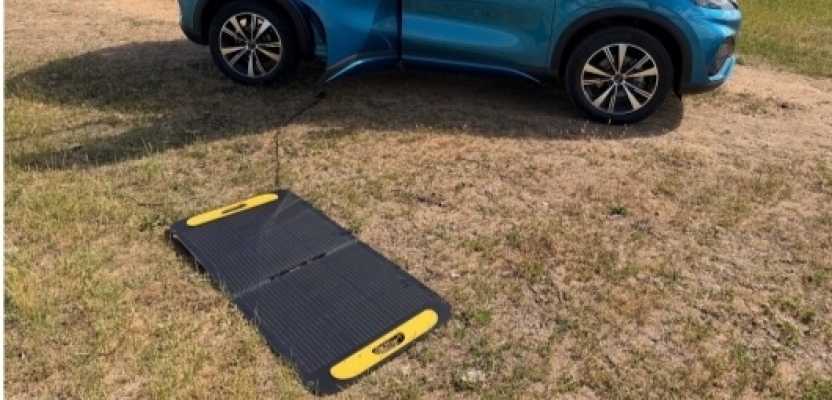
We use large scale Solar Powered portable batteries to charge all of the camera gear & lighting for shoots. Through the shoot day, we put the solar panels out to recharge the master battery - which is remarkably quick. There is even enough juice to recharge everyone’s phones for a quick Instagram break over lunch.
5. Who’s calling shotgun?
We work out where all the cast and crew live and carpool using Electric Vehicles to minimise travel and carbon footprint. It’s also a great way for everyone to get to know each other before the cameras roll, and to judge each other’s taste in music.
6. Not a Runner but a Vegetarian Chef
Traditionally on film shoots you will have a runner getting coffees and lunches etc. We’ve managed to source some amazing chefs who enjoy being a part of shoots aimed at making a sustainable difference. They make the coffees on set and cook up sensational vegetarian meals for cast, crew, and client - running on those wonderful solar powered batteries.
7. Room for another?
Accommodation is always a huge impact on a shoots carbon footprint. For those who know each other and are happy to share do so in multi bedroom Air BNB’s. Cast and client etc will want privacy, so we book rooms in hotels and carpool to and from. If anyone would like to do a shoot where we all camp with solar power, let us know because we’d be up for it!
8. Post-production isn’t an after thought
We choose voice over talent who have their own studio to avoid travel and direct the sessions virtually. The edit suit is solar powered back to a battery bank. We use energy efficient cloud storage for data we need to access frequently, and local storage we can power down for archiving.
Putting meaning into sustainability
Look, we’ve all been on those giant shoots where the crew list is longer than the script and the cast spends half the day waiting around for their scene. That’s just not how we roll. When we tell everyone that we’re doing things differently and creating a shoot in the most sustainable way possible, they get on board.
It builds a can-do attitude where people actually want to help make good stuff happen. Our DOPs use the latest tech to help light scenes, the cast helps move props, and sometimes they’re even directing traffic under the watchful eye of our executive producer! This whole agile, pitch-in culture gives everyone more ownership of the final film.
Most people see sustainability as that obligatory slide they have to include for company policy. But when you build it into the foundations of how you work, it becomes something genuinely exciting that you can be proud of. Who said altruism is dead?