
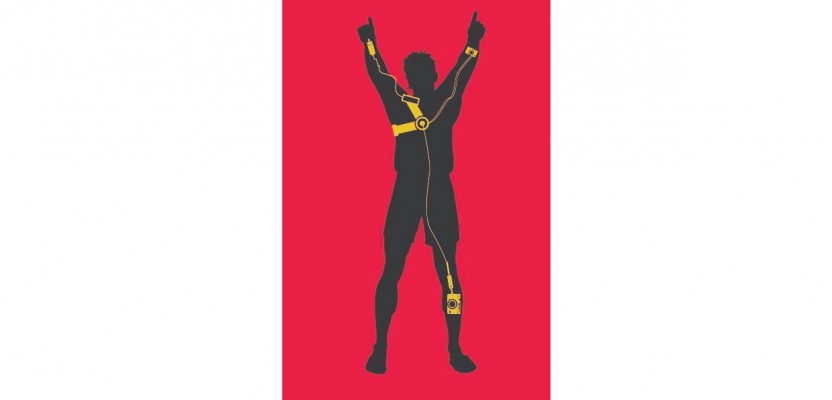

A creative process moves through several different modes before it is realized into an idea, action or a product. The process begins with a thought—what some might call a “spark” of insight that gets translated to another medium, which then comes to occupy its final form. That moment is recognized as the human interaction with object, space, nature etc. The embodied cognition simultaneously constraints and prescribes certain interactions within the environment. These interactions have a purpose, and the human brain has the power to achieve values such as thought process, sensing an environment or addressing an action with gestural interpretation to a particular level. Thus, these values are part of cognitive behaviors of the human brain. Consequently, storing these behaviors in the form of data, almost about the space of the organism. The way people conceptualize virtual space is an important consideration to understand relations. To better understand a person’s thinking is to understand their common space. This space can be classified into many divisions, but the most mainstream is real space, measured space, and virtual space. While this dichotomy of space is grounded in the view of psychology that people’s perception of space, spatial cognition, and spatial behavior are experience-based; all these experiences have a form. Since we can’t visualize these forms as a direct approach, therefore, the purpose of this research is to identify symbolic representations of these cognitive experiences through behaviors, emotions and gestural activities in Phenomenology. Through my research, I explore to reflect these embodied cognitive experiences back into the environment through visualization and musical interpretation through deep learning system. This system will allow the user to experience and reuse their experiences in future.
http://afaqkaradia.com/virtual-instrument/