

Not too long ago, topics like generative AI and machine learning were pretty intangible terms for most creative professionals. Today, they’re front and centre. Around conference tables and at industry events, everyone is talking about how artificial intelligence is reshaping creative work. (At Cannes Lions recently, it was clear that AI and data were at the forefront of creative leaders’ minds.)
The question now isn’t if AI will impact creative teams – it’s how ready those teams are to use it. This brings us to a pressing concern: Is there an AI skills gap in creative agencies and teams? And if so, how do we bridge it?
In everyday terms, an “AI skills gap” means there’s a divide between the skills employers need (or will soon need) to work effectively with AI, and the skills their people currently have. In creative fields – advertising, design, marketing, content creation – this could manifest as teams that are brilliant at ideas and craft, but not yet fluent in the latest AI tools and workflows.
The pace of change has been dizzying. New AI tools seem to emerge every week, from image generators and copy assistants to data analysis tools. It’s no wonder many creatives feel like they’re scrambling to catch up.
Leaders certainly recognise the stakes. In fact, nearly 80% of business leaders say their company must adopt AI to stay competitive. Yet acknowledging the need is one thing; taking action is another. More than half of those leaders worry they lack a clear plan to actually build AI capabilities on their teams. It’s a classic “knowing-doing” gap – we know AI expertise is crucial, but do we know how to cultivate it in our people?
Is There Really an AI Skills Gap in Creative Teams?
Look around many creative agencies or in-house teams today, and you’ll find a mix of attitudes toward AI. Some early adopters are experimenting enthusiastically – using AI to brainstorm concepts, automate tedious production tasks, or generate data-driven insights.
These pioneers often report real benefits: AI helps them save time, focus on high-level creative work, and even be more creative overall. (In one recent survey, 84% of professionals using AI said it actually makes them feel more creative at work – perhaps because AI speeds up the busywork and opens more time for imagination.)
However, you’ll also find many creatives still sitting on the sidelines – maybe curious about AI, but unsure how to begin, or unconvinced it’s relevant to their role. This disparity in skills and comfort with AI can absolutely be called a “gap.” In some organisations, it’s a glaring one: the people with AI know-how are racing ahead, while others feel left behind.
One striking insight is that the gap isn’t always where we expect. You might assume younger “digital-native” creatives would lead the AI charge. Yet a recent design industry study found seasoned designers (10+ years experience) had higher AI adoption rates than juniors. The veterans viewed AI as an augmentation of their expertise, not a threat, and were more adept at weaving it into workflows. Meanwhile, some junior creatives felt a bit intimidated – they saw AI as a creative competitor rather than an assistant, which hit their confidence.
This counterintuitive finding suggests the AI skills gap isn’t just about age or tech-savviness; it’s about mindset and guidance. Experienced creatives, with their strong creative judgment, can harness AI effectively, whereas less experienced folks might need mentorship to see AI as a tool for them, not against them.
Another dimension of the gap is resources and training. Many creative organisations talk a good game about innovation and AI – but are they investing in upskilling their teams? Often, the answer is no. There’s a disconnect between the C-suite rhetoric and the reality on the ground. Consider these numbers: about 74% of designers are teaching themselves AI tools on their own time, outside of work, even as their organisations tout “innovation”.
And roughly 78% of employees who use AI at work are “bringing their own AI” – adopting tools on their own dime rather than through company-provided solutions. In other words, many companies want AI-proficient creatives, but aren’t formally training them; individuals are taking the initiative to skill up because they have to.
This irony hasn’t gone unnoticed: “Organisations want AI-savvy designers but won’t invest in making them so,” as one industry observer dryly noted. The result is an unsustainable dynamic where designers shoulder the burden of learning new tech, while employers reap the benefits.
It’s not just within teams – there are also broader talent pipeline gaps. One particularly worrying gap is the gender gap in AI skills. In the tech world at large, men currently far outnumber women in AI-related roles, and that extends to skills. A recent study highlighted a staggering 42-point difference in AI proficiency between men and women, with about 71% of men claiming AI skills versus just 29% of women.
That’s a huge divide. Within creative fields, this matters because diverse teams produce better work – if women (or any underrepresented group) lack access to AI skills, they risk being left behind in the future of creative work. Industry leaders are starting to respond.
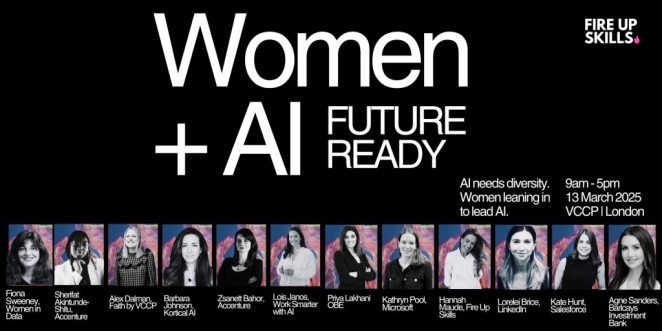
For example, earlier this year the agency VCCP launched a “Women & AI: Future Ready” initiative to equip more women with AI skills and ensure inclusivity in our AI-driven future. Bridging the AI skills gap isn’t only about old vs. young or tech vs. creative – it’s also about making sure everyone in the creative community has the opportunity to learn these tools, regardless of gender or background.
So yes, if we take stock across the creative industry, there is an AI skills gap. It shows up as uneven adoption of AI, as a lack of structured training, and as disparities between different groups. But the good news is that creative teams are not powerless to address it. In fact, many are tackling it already in clever, proactive ways.
Proactive Upskilling: How Creative Leaders Are Bridging the Gap
Forward-thinking agencies aren’t waiting passively for this gap to close itself – they’re actively working to shrink it. One approach is upskilling and reskilling from within: identifying people with solid creative or digital fundamentals and giving them training to add AI to their skillset. After all, a great art director with a growth mindset can learn generative image tools; a savvy copywriter can pick up AI-driven research or copy generation techniques – if you support them in that learning.
“We’re actively addressing the evolving landscape of skills, ensuring our teams are well-prepared for future demands, including those driven by AI,” says Adrienn Major, Founder at POD LDN. She explains that her agency has been proactive in retraining folks from more traditional roles and fostering continuous growth. How? Through regular training sessions and knowledge-sharing workshops that keep skills fresh.
Adrienn emphasises that it’s an ongoing effort: pinpointing a specific “AI skills gap” is an ongoing assessment, she notes, but the key is building a workforce that instinctively uses AI. In practice, that means creating a culture where using AI tools is second-nature – where designers, writers, strategists, etc., all view AI as part of their everyday toolkit, just like brainstorming or sketching.
Her approach isn’t unique. Many creative leaders are encouraging a culture of learning and experimentation with AI. Some agencies have set up internal AI “labs” or task forces where team members can play with new tools and then share what they learned. Others invite guest speakers or run hackathon-style workshops to spark excitement about what AI can do.
The underlying idea is the same: give your people permission to experiment (and even to fail sometimes) as they learn. That psychological safety is huge. In one survey, a designer in a supportive workplace said they’re “encouraged to explore and experiment [with AI] even if the outcome isn’t immediately applicable.” That kind of encouragement separates the leaders from the laggards – it creates an environment where people feel empowered to build new skills, rather than afraid of getting it wrong.
Another tactic is to hire for AI aptitude when filling new roles. This doesn’t mean replacing your creatives with robots (or with data scientists), but it might mean that when expanding the team, you prioritise hybrid skillsets. We’re starting to see job postings that look for, say, “social media creative with AI experience” or “video editor familiar with AI tools for post-production.”
In fact, in a Microsoft report, 71% of business leaders said they’d rather hire a less-experienced candidate with AI skills than a more experienced candidate without them. That speaks volumes. However, hiring new talent alone isn’t a silver bullet – it has to go hand-in-hand with upskilling your existing team, or you’ll create an internal rift. New AI specialists might end up siloed, when really the goal should be cross-pollination of knowledge.
Then there’s the question of external training and education. Many creatives are turning to online courses, tutorials, and communities to boost their AI chops. In the absence of formal company training, this DIY learning is rampant – an Its Nice That survey in late 2023 found that a whopping 97% of creatives who use AI learned it through personal experimentation, while only 5% had taken any kind of course on it.
That stat is simultaneously inspiring (creatives are resourceful!) and concerning (are our educational institutions and employers doing enough?). In response, some agencies have begun subsidising online AI courses or certifications for staff, essentially saying “if you take the initiative to learn, we’ll foot the bill or give you time to do it.” Even modest support like that can accelerate closing the gap. And some universities and design schools are finally weaving AI into their curricula for creative disciplines – though academia can be slow, and many current professionals aren’t going back to school, so a lot of upskilling will continue to happen on the job.
One more point on bridging the gap: community and knowledge-sharing. The creative sector is actually quite good at this – think of all the design blogs, portfolio sites, conferences, and yes, Creativepool’s own community. When one creative figure finds a way to use AI art generators in ad campaigns, or a copywriter figures out great prompt techniques for brainstorming copy variations, they often share that insight in articles or social posts.
This peer-to-peer learning helps everyone level up together. It’s the classic “a rising tide lifts all boats” philosophy. As evidence of this community approach, there are now countless Slack groups, Discord servers, and meetups dedicated to creatives using AI. Freelancers especially benefit from these, since they may not have an internal team to learn from – by tapping into the broader network, they can stay on the cutting edge.
At the end of the day, bridging the AI skills gap is about investing in people. It requires time, training, and a bit of a mindset shift. But consider the payoff: a team that’s fluent in both creativity and AI is going to absolutely outpace one that isn’t. Organisations that empower their creatives with AI training are already creating “exponential productivity gaps” between themselves and more cautious competitors. In other words, if you give your team the tools and permission to get good at AI, they’ll multiply their output and ideas in ways that others (who are still hesitating) simply can’t match. The competitive implications are huge.
Human + Machine: Toward an Integrated Creative Curriculum
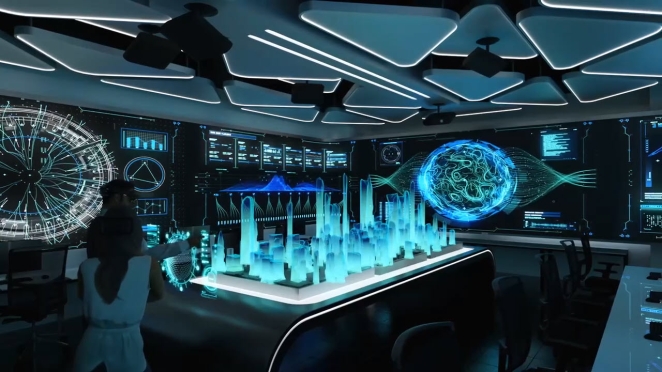
This leads to a big question about the future: Should creative and digital skill sets be taught separately, or in an integrated “human + machine” way? Adrienn Major, for one, is unequivocal: “The future clearly calls for an integrated ‘human-machine’ curriculum; separating creative and digital expertise from AI collaboration would limit our potential. Instead, we must teach these skillsets in unison, empowering professionals to amplify human ingenuity with AI and drive true innovation.”
In other words, it’s not “creative versus technical” or “human versus AI” – it’s both, together. The most powerful creatives of tomorrow will be those who can blend artistic vision, storytelling, and empathy with a solid understanding of AI tools and data-driven strategy.
Why integrated? Think of it this way: for decades we’ve talked about “left brain” and “right brain” talents – analytical vs. creative. But the most effective people in our industry often balance both. AI, in a sense, allows us to supercharge that balance. It takes over some left-brain heavy lifting (like analysing huge sets of data, or generating dozens of design variations in a blink), which actually frees up the right-brain imaginative work. But to make use of that, a creative professional has to know how to direct the AI – how to co-create with it. That’s a skill in itself.
As design thought-leader Rob Boyett put it in Design Week: “The future designer needs to be equally skilled in creative thinking and AI orchestration, understanding both the possibilities and limitations of machine creativity.”. That notion of AI orchestration is key – it’s not about coding algorithms from scratch (nobody’s saying every art director needs to be a PhD in machine learning), but it is about understanding what AI can and can’t do, and how to guide it to get the outcomes you want. It’s a new kind of creative skill, a hybrid of art and science.
If we tried to teach “creative skills” in a vacuum, and “AI/technical skills” in a separate silo, we would indeed limit potential. An art school graduate in 2030 who knows all about concepting and color theory but nothing about AI might be at a disadvantage in the job market. Conversely, someone who’s a whiz at coding or data but has never developed their creative muscles might struggle to apply those tech skills in a nuanced, culturally resonant way. The magic happens at the intersection.
So, whether it’s in formal education or on-the-job training, an integrated curriculum is the way forward. We’re already starting to see programs that reflect this – for example, some universities offer courses like “Creative AI” or minors in AI for design majors, and training companies are popping up with courses on how to use AI in marketing, in UX design, in video production, etc., blending creative domain knowledge with tech.
An integrated human/machine approach also helps dispel the false dichotomy of human vs. AI. There’s a popular adage: “AI won’t replace you – but a person using AI might.” In other words, the goal is not to pit ourselves against the machine, but to team up with the machine. Those creatives who learn to ride this new “bicycle for the mind” will simply go further than those who don’t.
It’s a bit like when Photoshop or 3D animation or even basic computer literacy first entered the creative fields – initially, these were specialised skills, but over time they became part of the standard skill set for most roles. We can expect AI literacy to follow a similar path, potentially even faster. In a few years, listing “AI collaboration” or “prompt engineering” on your résumé might be as commonplace as “social media savvy” or “Adobe Creative Suite proficiency.” It will just be woven into how we create.
Crucially, “integrated” doesn’t mean every single person must be an expert in everything. We’ll still have specialists – data scientists, technologists, pure creative visionaries, etc. – but cross-training will increase. A copywriter might not need to know the intricacies of GPT architecture, but they should know how to use an AI writing assistant effectively. A graphic designer might not code neural networks, but they should feel comfortable directing an image generator or using AI in their design process.
Likewise, a data analyst in a creative agency should have some grounding in storytelling and visual communication, so that when they use AI to derive insights, they can translate those into creative strategies. The future curriculum, be it academic or corporate training, likely blends creative and technical coursework throughout. It’s not “either/or,” it’s “yes/and.”
Embracing the Synergy: The Road Ahead
Bridging the AI skills gap is an ongoing journey, not a one-time fix. The landscape is evolving too quickly for anyone to rest on their laurels – continuous learning will be part of the new normal for creative professionals. But that’s part of what makes the creative field exciting: we are lifelong learners by nature, always looking to master the next tool or medium that helps us tell stories and connect with audiences. AI is just the latest (albeit game-changing) addition to that toolkit.
There will undoubtedly be challenges. Technology can be intimidating, and not every creative pro is immediately enthused about AI. Some fear that an over-reliance on algorithms could water down human originality or lead to cookie-cutter solutions. These concerns are valid and worth discussing. But rather than splitting “creative vs digital” or “human vs machine,” the consensus among thought leaders is that collaboration is the winning path.
One Creativepool member nicely framed it as: AI isn’t a threat to creative culture, it’s a mirror and a multiplier. It reflects our inputs (good or bad) and can amplify our creative impact. In essence, AI can scale up our ideas and execution, but the ideas and direction still come from human creativity and intuition.
Ultimately, the goal is to amplify human ingenuity with AI – using machines to do what they do best (processing tons of data, iterating rapidly, optimising), so that humans can do what we do best (imagining, empathising, giving work a soul and strategy). When you pair a skilled creative mind with a powerful AI assistant, that’s when the magic happens. We’ve already seen early glimpses: ads generated in part by AI that still tug at heartstrings, designs executed faster than ever without sacrificing quality, campaigns informed by AI insights that nail cultural relevance.
For freelancers and creative leaders alike, now is the time to lean into this integrated approach. If you’re a freelancer, take advantage of the flexibility you have to learn new tools – it could set you apart in pitches (and justify higher rates). If you’re a creative director or agency leader, set the tone by encouraging your team to experiment and by providing training resources; show them you’re invested in their growth.
In either case, don’t be afraid to admit what you don’t know and learn alongside others. The truth is, everyone is learning right now – the field is so new that even “experts” are figuring it out in real time. So foster a culture where sharing AI tips and tricks is welcomed, where successes are celebrated and failures are seen as learning steps.
We should also acknowledge that bridging the skills gap isn’t just about technical skills; it’s about creative evolution. As AI handles more rote tasks, creatives may find their roles shifting more toward strategy, big-picture thinking, and fine-tuning of AI outputs. Skills like storytelling, brand understanding, ethical judgment, and emotional intelligence will become even more important – these are the human qualities that ensure what the AI produces actually resonates and is responsible.
In a way, the rise of AI makes the human side of creativity more valuable, not less. Creatives should absolutely keep honing the uniquely human skills that AI can’t replicate (at least not easily): things like empathy, clever ideation, intuition for cultural nuance, and the ability to craft meaning. The future creative curriculum, therefore, is not just AI for creatives, but also creativity for AI – teaching AI and teaching what to do with AI’s outputs.
As we move forward, the message is clear: embrace the change or risk falling behind. The good news is that embracing AI as a creative partner doesn’t steal our mojo – it can actually amplify it. Those who blend human creativity with machine efficiency will unlock new levels of innovation. Those who cling to old models (“this is how we’ve always done it”) may find themselves outpaced by more adaptable competitors.
It might sound a little blunt, but it’s like any technological shift in the past: the adopters who integrated new tools thrived, and those who resisted often got left playing catch-up. The difference now is the speed and scale – AI’s evolution is incredibly fast, so the gap can widen quickly if we’re not proactive.
In closing, bridging the AI skills gap in the creative industry isn’t a one-time bridge at all – it’s more like building a continuous bridge that we keep extending as new technologies emerge. The future is a dynamic “human + machine” collaboration. By teaching our teams (and ourselves) to instinctively leverage AI, by marrying creative and digital skillsets into one holistic practice, we set ourselves up not just to survive this wave of change, but to truly excel.
After all, at its heart, creativity has always been about venturing into the unknown, experimenting, learning, and innovating. AI is just another unknown that, once understood, can become a wellspring of inspiration and efficiency. As Adrienn Major wisely pointed out, separating creative prowess from AI know-how would only limit us – it’s when we unite them that we drive true innovation.